Overfishing

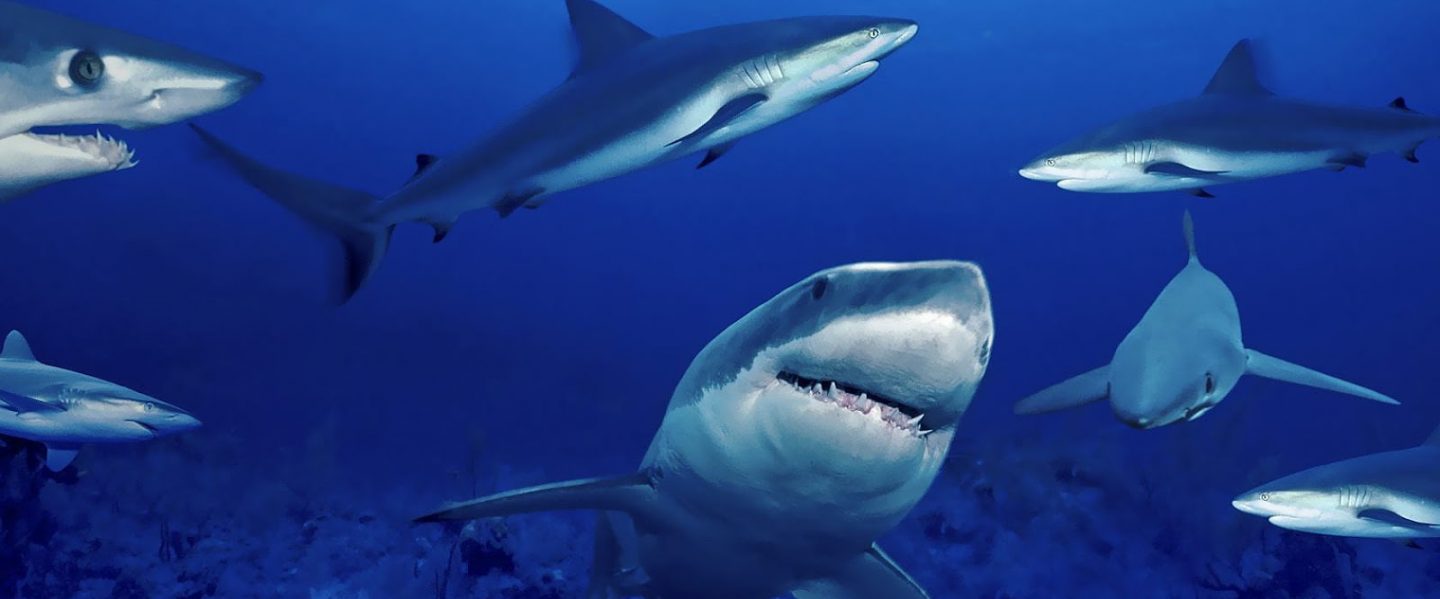
We see problems with overfishing among many of our aquatic animals. As fishing for food became more common at the peaks of our industrial age, the populations of many of these desired food sources plummeted and we saw an increasing extinction rate for these fish. Authors Darcy and Steven of an article titled “Extinction Risk: counting the cost of overfishing on sharks and rays” feel as though sharks are rays need to be advocated for. Sharks and rays share characteristics that make them vulnerable to extinction when being targeted for fishing (Bradley and Gaines, 2014). They mature later, have long gestation periods, and create few offspring (Bradley and Gaines, 2014). A sharks habitat also spans long ranges into more than one nation which makes efforts to protect them become more difficult as they now require international coordination (Bradley and Gaines, 2014).
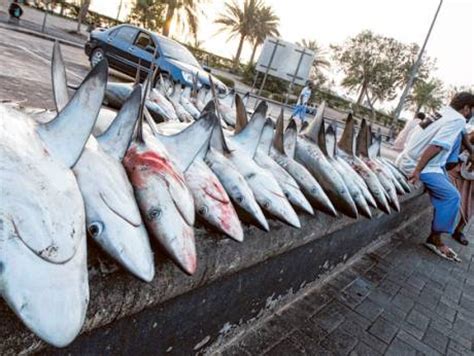

gulfnews.com
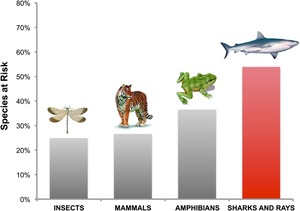
According to Bradley and Gaines (2014), Sharks are more at risk of extinction than amphibians, mammals and insects due to overfishing processes.

Shark fin soup is a delicacy in Asia. Although the soup is rumored to have an unpleasant taste, it is still of high value and is observed as a status symbol to many high class individuals. To obtain the fins sharks are often caught, fins cut from their bodies, and thrown back into the waters to die a painful death instead of using parts of the shark for other purposes. This is a harsh and inhumane process that contributes to the declining population of sharks in our marine ecosystems which further cause indirect effects that change the ecosystem as a whole. Without sharks we could see a major change in our marine ecosystems. So if by any chance you are traveling in Asia and are offered this soup, SAY NO.

shark fin soup via
eco-business.com

The Effects of a Decreasing Shark Population on Trophic Cascades

Trophic cascades are powerful indirect interactions that can control an entire ecosystem. With the example of sharks we see a top-down control trophic cascade because they are one of the top apex predators in marine environments. The removal of the top predator allows it’s direct prey to increase in number. This expansion can be rapid when predation is the main controller of the prey population.  The expansion of these populations then leads to increased predation or herbivory, and can potentially lead to a significant drop in plants and animals lower in the food chain. Removal of a top predator can result in a distinct shift in the type of ecosystem we see overall.  This isn’t just a problem for the environment, these changes can also lead to social and economic issues in certain circumstances. For example, another blogger from confessions of a marine ecologist blog states that in her work with tiger sharks shows that the presence of large tiger sharks influences the feeding preferences of many of the herbivores like turtles in Shark Bay, which in turn results in changes to spatial patterns of herbivory pressure on seagrass meadows. (https://marineecologist.wordpress.com/2014/02/02/lets-argue-against-the-shark-cull-with-science/)


bigkev57.deviantart.com. A tiger shark at Shark Bay.

What is currently happening to our shark populations

It is nearly impossible to keep track of the amount of sharks living in our marine environments, but there are some methods that allow us to determine population trends. One of these methods is called a fishery dependent population survey. fisheries are legally required to keep a detailed record of their catch (and bycatch) and researchers can use these records to assist in determining population trends.

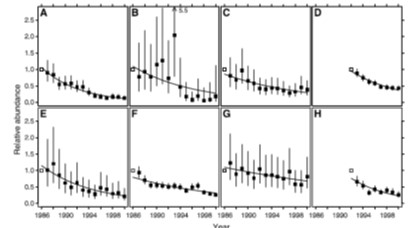
Dr. Julia Baum (2003) and her team did just this in a popular article titled “Collapse and Conservation of Shark Populations in the Northwest Atlantic.” Their results were shocking in that they found that from 1986 to 2003 analysis of logbook data suggests a population decline of 89% in hammerhead sharks, 79% in great white sharks, 65% in tiger sharks, 80% in thresher sharks, 60% in blue sharks, and 70% in mako sharks (Baum et al., 2003).


Declines in estimated relative abundance for coastal shark species: (A) hammerhead, (B) white, (C) tiger, and (D) coastal shark species identified from 1992 onward. As well as oceanic shark species: (E) thresher, (F) blue, (G) mako, and (H) oceanic whitetip. (Baum et al. 2003)

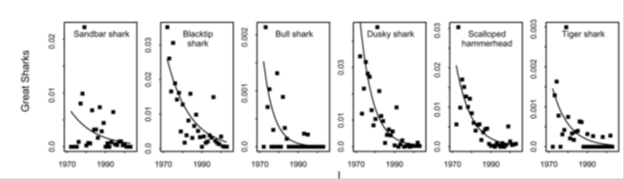
Another method to determined population trends in sharks are fishery-independent surveys which are usually conducted by universities or governments. A 2007 paper titled “Cascading effects of the loss of apex predatory sharks from a coastal ocean” used an ongoing fishery-independent survey from 1972 in North Carolina state waters. shockingly, all of the sharks in the survey had decreased within 35 years, some by over 90% (Myers et al., 2007)

the decline in sandbar, blacktip, bull, dusky, scalloped hammerhead, and tiger sharks along the coast of North Carolina configured by Myers et al. (2007)

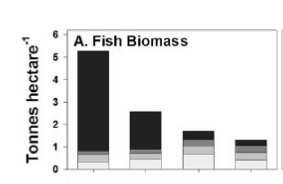
Another way to observe the decline in shark populations is to observe their biomass in pristine, unfished ecosystems. As fishing becomes more high-tech, these environments become less and less. However, an expedition to the relatively-pristine Northern Line Islands in 2010 determined that there are a lot of sharks, which the authors of the article titled “Baselines and the degradation of Coral Reefs in the Northern Line Islands” refer to as an “inverted trophic pyramid!” Additionally, the relative number of sharks changes proportionally with fishing pressure (Sandin et al. 2010).

Figure from Sandin et al. 2010 where the black bars indicate apex predators like sharks. The scale goes from unexploited (pristine) on the left, to exploited (overfished) on the right.