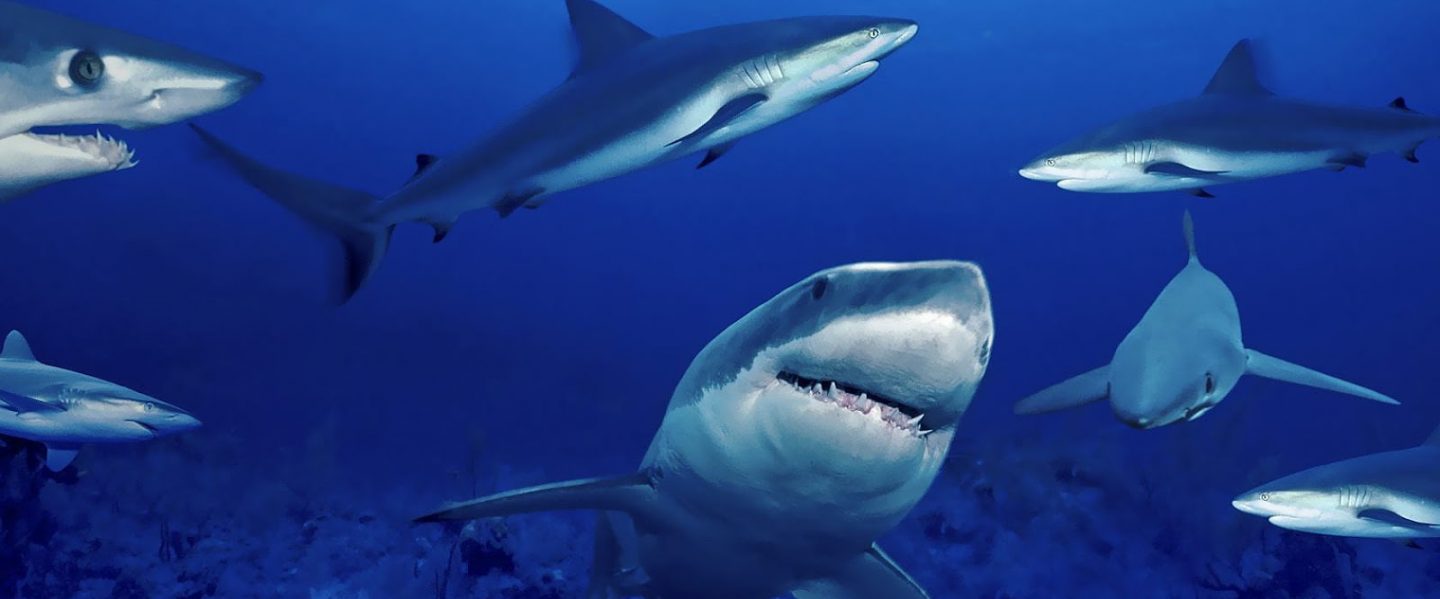
Trophic cascades are powerful indirect interactions that can control an entire ecosystem. With the example of sharks we see a top-down control trophic cascade because they are one of the top apex predators in marine environments. The removal of the top predator allows it’s direct prey to increase in number. This expansion can be rapid when predation is the main controller of the prey population. The expansion of these populations then leads to increased predation or herbivory, and can potentially lead to a significant drop in plants and animals lower in the food chain. Removal of a top predator can result in a distinct shift in the type of ecosystem we see overall. This isn’t just a problem for the environment, these changes can also lead to social and economic issues in certain circumstances. For example, another blogger from confessions of a marine ecologist blog states that in her work with tiger sharks shows that the presence of large tiger sharks influences the feeding preferences of many of the herbivores like turtles in Shark Bay, which in turn results in changes to spatial patterns of herbivory pressure on seagrass meadows. (https://marineecologist.wordpress.com/2014/02/02/lets-argue-against-the-shark-cull-with-science/)

bigkev57.deviantart.com. A tiger shark at Shark Bay.

 Sharks Are Important Too!